
Woollahra station plan ticks every box for good planning and urban design
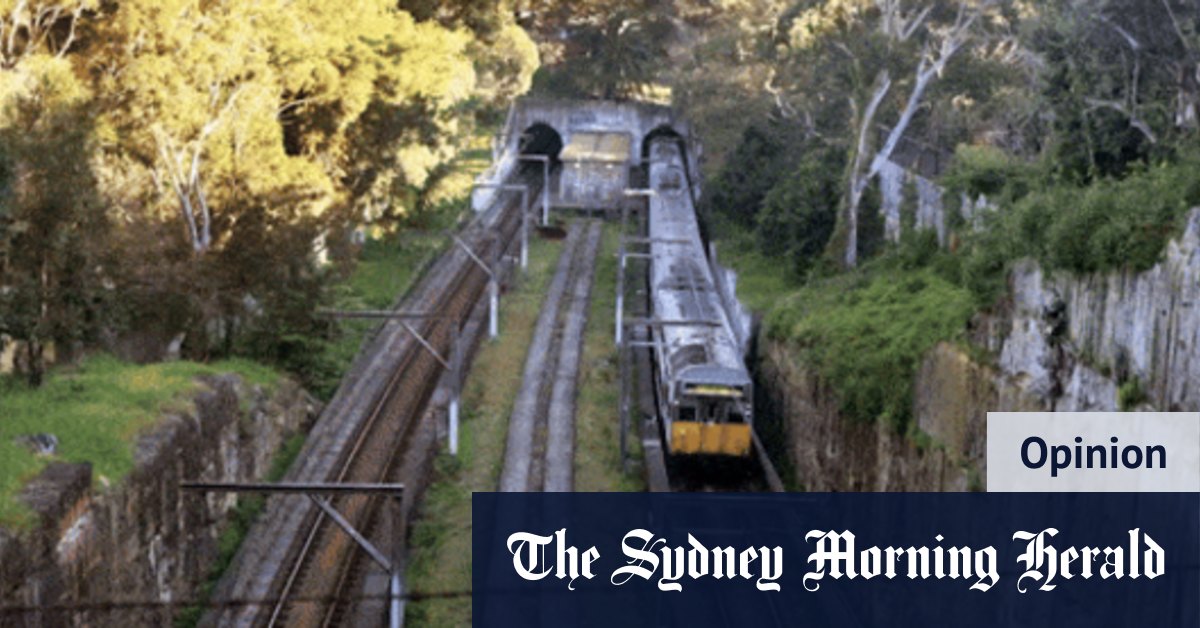
No sooner had the economic roundtable finished in Canberra than a perfect test case for its housing ambitions appeared in Sydney’s east – at the unused Woollahra railway station site.
Housing was front and centre at the roundtable, where changes sought to speed up supplying 1.2 million houses in the next five years included cutting red tape, speeding up approvals by authorities, challenging the Environment Act and holding off on new requirements in the National Construction Code.

NSW Premier Chris Minns makes the announcement about the Woollahra station on Sunday as an eastern suburbs line train passes behind.Credit: Sitthixay Ditthavong
Woollahra station ticks every box for good planning and urban design: housing located on a rail line is perfect Transport Oriented Development, the ideal of the Department of Planning’s new “low and medium rise” rules to increase housing density. The site is on a ridge, so good views from the towers, but view loss for others (an obsession for Woollahrites) is minimised, and the proposal is not unexpected – it’s been on the books for 45 years! But wait, there’s more: plentiful walkable local amenities, and every retail and commercial desire is only one station away at Edgecliff or Bondi Junction.
There’s design precedent at Edgecliff: a TOD that could have been so much better. In the mid-60s, the Anglican Church – the majority landowner in the area – engaged Clarke Gazzard, Sydney’s best architect/planners of the time, to design a series of ridge-based towers culminating in the Edgecliff Centre (built before the railway line, with a giant basement for the future station). In the end, only one well-designed tower was built (Goodwin Retirement Village), the remainder being poor quality market-driven apartments. There is much for Woollahra station to learn here.
But all that upside won’t stop the proposal being thwarted at every turn. The council will most likely take an opposing position on behalf of its residents, the NIMBYest area in Australia. In any event, the state will wrest it away from council, citing less red tape and a faster approval through its “State Significant Proposals” legislation, leaving locals loudly venting their frustrations about “democracy”.
Loading
Preliminary designs show six-storey to eight-storey apartment buildings, often regarded as the sweet spot in creating sustainable amenity. Whatever size, they will face two high hurdles: state design regulations (apartment design guide or ADG), and the National Construction Code (NCC), both of which are in productivity gurus’ sights.
There’s no doubt that 20 years on from its creation, the ADG has been crucial in raising the design quality of apartments, but many of its sacrosanct stipulations are increasingly under fire: overblown sizes, unnecessary balconies, the need for 25 per cent site area as “communal open space”, irrespective of apartment numbers. To many, it seems to be a recipe for stacked suburban houses, not real apartments.
This comes into sharp focus at Woollahra station through the lens of a recent book, Interwar Apartment Buildings in Woollahra, by amateur historian Larisa Sarkardi. Despite the seemingly arcane title, the book is celebrated by many over-burdened architects, not least because not one of its 129 beautiful art deco/art nouveau buildings would be approved today under the ADG: living areas and bedrooms are too small, no balconies, insufficient parking, no communal outdoor space and on and on.
link



:max_bytes(150000):strip_icc()/GettyImages-544347092-69d2e73c38f345a7baa16f89d6570186.jpg "This Kitchen Countertop Style Is So 2010s")

